

Cervix is the end of the womb that opens into the vaginal canal. Cancer of the cervix occurs when cells of the cervix multiply and grow at abnormal rate.
It is the 4th most common cancer in women globally, with about 90% of new cases and deaths occurring in low- and middle-income countries.1 it is also, the 7th most common Cancer in the world generally.2 Cervical cancer is usually slow growing, taking many years from onset to manifestation.
If undetected, and treatment not initiated early, cervical cancer progresses from epithelial dysplasia to carcinoma-in-situ, to invasive carcinoma. Carcinoma-in-situ may last for more than 8 years before progressing to invasive cancer.3
In this article, we shall discuss the risk factors, symptoms, types, diagnosis, prevention, treatment, effects on sexuality/fertility, and myths about cervical cancer.
Cervical Cancer Risk Factors2,13
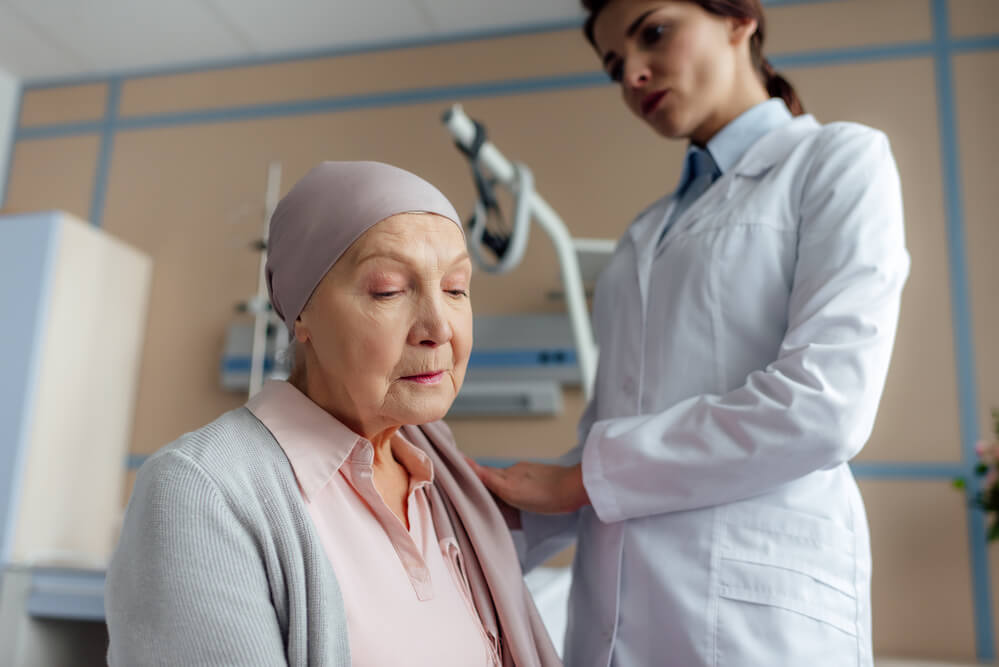
Definite cause of cancer of the cervix is not certain, but some situations and conditions increase one’s chances of getting cervical cancer.
These are known as risk factors. Some of the risk factors are modifiable, meaning that it is within the power of an individual to avoid exposure to these risk factors; while some risk factors are not within the power of the individual to avoid (unmodifiable).
Having a risk factor, or several risk factors does not mean that one most get cervical cancer. Few persons without any known risk factor, may also develop the disease.
Modifiable risk factors include;
- Human Papilloma Virus (HPV) infection, which has been found to be associated with about 95% of cervical cancer cases. HPV group is made up of about 150 types, with some causing relatively harmless lesion such as papillomas and warts, while some such as types 16 and 18 are responsible for most cervical cancer cases. Those relatively harmless ones are said to be low risk or non-oncogenic types; while the cancer causing ones are high risk or oncogenic types. This infection is sexually transmitted, though more than 90% of those infected eventually clear the infection.
- Early exposure to sexual intercourse: In many cases, girls who voluntarily indulge in sexual activities before 18 years of age, end up having sexual intercourse more frequently and with different men. They are thus exposed more to infection with HPV, and other sexually transmitted diseases.
- Multiple sexual partners: This increases the number of exposure to infection with HPV and other sexually transmitted infections
- Giving birth to many children: Some findings suggest that giving birth to more than three children exposes women to cervical cancer disease. In addition to more exposure to HPV infection, hormonal changes during pregnancy could make women more susceptible to the effects of HPV infection.
- Poorly treated sexually transmitted infections such as Gonorrhea, Chlamydia, Herpes Simplex, Syphilis. Certain studies revealed that Chlamydia infection could enhance the growth of HPV
- Excessive use of oral contraceptive pills: This risk increases with the number of years that the oral contraceptive pills are used, but however reverses gradually when the use of the pills is stopped.
- Tobacco smoking: Women who smoke are twice more likely to develop cancer of the cervix. Smoking reduces the immune system and makes it more difficult for women infected with HPV to overcome the infection.
- Reduced immunity as seen in HIV infection. Women living with HIV are six times more likely to develop cervical cancer. Women taking drugs to suppress the immune system as seen in treatment of autoimmune disorders or organ transplant
- Uncircumcised male partner: Males that are not circumcised habour HPV infections more, are thus more equipped to transmit the disease to female partners
- Low socio-economic status: Many women who are poor cannot afford to go for cancer of the cervix screen, through Pap smear of HPV screening; hence they are unable to detect the disease at the pre-cancerous stage and stop it.
- Persistent consumption of diet low in fruits and vegetables: Diets that are high on saturated fats such as red meat, and low on fruits and vegetables are usually risk factor for different kinds of cancers, including cervical cancer
Unmodifiable risk factors are;
- Family history: Women whose mother, sister or close relation had cancer of the cervix are at greater risk of developing the disease. Some researchers suggest that there might be an inherited condition that makes some women less able to fight HPV infection.
- Age: It has been found out the cancer of the cervix occurs mostly among women aged 25 – 45 years.
- Exposure in mother’s womb, to Diethylstilbestrol (DES): This drug was used to prevent miscarriage in pregnant women between 1938 and 1971 in the United States of America when it was stopped by the Food and Drug Administration (FDA). The use probably continued in other countries, especially the low- and middle-income countries for some more years. It was found out that girls, whose mothers used DES to prevent miscarriage during pregnancy, later developed clear cell adenoarcinoma of the vagina and cervix. This form of cancer is extremely rare in women that were not exposed to DES in their mother’s womb. Squamous cell carcinoma and pre-cancers of the cervix are also more common among those exposed to DES.
Symptoms of Cervical Cancer2,6
Symptoms are changes that the patient will observe in her body, as a result of developing cancer of the cervix. Usually there are no symptoms in the early stages of the disease. Symptoms when they later appear include;
- Abnormal vaginal bleeding which could manifest as;
- Bleeding after sexual intercourse
- Prolonged menstrual bleeding
- Recurrence of bleeding after cessation of monthly menstruation
- Painful sexual intercourse
- Vaginal discharge (fluid coming out from the vagina)
- Persistent lower abdominal/pelvic pain
Types and Stages of Cervical Cancer6,7,10

There are two main types of cervical cancer, which are;
- Squamous cell carcinoma, which begins in the lining of the outer part of the cervix, projecting into the vagina. This is the commonest type (80 – 90%).
- Adenocarcinoma, which begins in the cells that line the cervical canal (10 – 20%). These cells are column-shaped glandular cells
Very rarely, the two may co-exist, or cancer may begin from another type of cervical cell
Staging is used to describe where the cancer is located; whether it has spread beyond the cervix and uterus. Correct staging is important in deciding the best treatment option. There are four broad stages developed by the International Federation of Obstetrics and Gynaecology.
These stages could be further divided into smaller groups, to give more detailed description of the location of the cancer tumour. The four broad stages are;
- Stage I – Cancer found only in the cervix
- Stage II – Cancer has spread beyond cervix and uterus to close areas such as upper part of the vagina and nearby tissue, but has not yet reached the pelvic wall.
- Stage III – Cancer has spread to the lower third of the vagina/pelvic wall/lymph nodes/ureters
- Stage IV – Cancer has spread to rectum, bladder, and other parts of the body such as lungs and bones.
Diagnosis of Cervical Cancer7,10
Definitive diagnosis of cervical cancer is confirmed through histological examination of a biopsy specimen. The diagnostic process commences with taking good history from the patient, and efforts made to ascertain if she has any of the known risk factors.
Physical examination, which may include pelvic examination under anaesthesia is conducted depending on the symptoms and signs found. Other investigations designed to assess the stage of the disease are now conducted. These investigations include;
- Colposcopy designed to examine the cervix and upper part of the vagina to visualize abnormal areas. It may also be used for biopsy.
- X-ray to see the chest or other parts of the body are affected. Intravenous urography is an x-ray that might be used to the kidneys and other urinary structures are involved.
- Computed Tomography (CT or CAT) scan: This produces images of internal structures in the body, and tries to identify abnormalities. It also measures the size of the tumour.
- Magnetic Resonance Imaging (MRI): This uses magnetic fields instead of x-rays to produce images of structures inside the body. This is used to assess the spread of the tumour
- Positron Emission Tomography (PET) or PET-CT Scan: It is more technologically advanced and specific for taking images inside the body, and assessing the spread of the tumour cells.
- Biomarker Testing: Cervical specimen could be obtained and tested for proteins, genes, and other factors specifically associated with the particular tumour.
- Cystoscopy: This is visual examination of the bladder. It is done to determine whether the bladder is involved.
- Sigmoidoscopy/Proctoscopy: This procedure is used to examine the anus, rectum and the tower part of the colon to assess the spread of the tumour to those areas.
Prevention of Cervical Cancer2,4,7,10
Adoption of Healthy lifestyles is very important in protecting women from developing cancer of the cervix. These healthy life styles include;
- Practicing safe sex such as correct and consistent use of condoms, and not having multiple sexual partners
- Delaying first sexual intercourse
- Avoidance of cigarette smoking
- Consumption of healthy meal (such as vegetables, fruits, grains, etc that are rich in antioxidants). Avoidance of excessive consumption of meals rich in saturated fat, such as red meat.
All these steps, in addition to Human Papilloma Virus vaccination are grouped as primary prevention.
- Human Papilloma Virus (HPV) vaccination: World Health Organization recommends vaccinating girls aged 9 to 14 years against HPV. This vaccine can be administered to women up to 45 years of age. Schedule for vaccination may vary depending on age, and availability of the vaccine.
Screening tests are done to detect abnormal cells that have the potential of becoming cancerous. Screening tests are grouped as secondary level of prevention. Screening tests are done through;
- Pap smear, which entails taking a swab from the cervix, and checking if there are abnormal cells that could become cancerous
- HPV screening is also done to find out if HPV is present in the cervix. Specimen is taken from the cervix.
- Visual Inspection with Ascetic Acid (VIA): A dilution of white vinegar is used for this test. It is applied on the cervix, and then visualized. Any area of the cervix that turns white is abnormal, indicating that further investigations should be carried out. This is a very simple and cheap test that is useful in resource-constrained settings
It is recommended that screening commences between 21 to 25 years of age, and repeated every 3 years. Screening should be discontinued at 65 years of age, if the last two results were normal.7
Prevalence of cervical cancer is reducing in developed countries as a result effective utilization of screening services; while this is not the case in low- and middle-income countries where these services are scarcely available.3
Treatment of Cervical Cancer2,7,10

There are different treatment options for cervical cancer patients. The one usually chosen depends on the stage of the disease, general health of the patient, if the patient is desirous of having children in future, and the age of the patient.
The doctor will guide the patient in arriving at the best treatment option. Treatment options include;
1. Surgery
This is usually recommended in cases where the cancer has not spread beyond the pelvic region. There are various forms of surgery performed for cervical cancer, and the doctor decides on the type; depending on the available technology and resources. Surgeries performed for cervical cancer include;
- Radical Hysterectomy: This is total removal of the uterus including the cervix, upper part of the vagina, pelvic lymph nodes and surrounding tissue (parametrium)
- Simple Hysterectomy: In this surgery, only the uterus and cervix is removed
- Trachelectomy: This involves only the removal of the cervix and upper part of the vagina. The body of the uterus is spared.
- Cone biopsy: A cone-shaped piece of the cervix is removed with the intention of removing all the portion of the cervix that is cancerous
- Pelvic Exenteration: This is very extensive, and involves the removal of the whole uterus, lymph nodes, vagina, parametrium, bladder, rectum, and part of the colon; depending on the extent of spread of the cancer cells
- Laser surgery: Laser beams are used to burn off the cancer cells. This could be done when the tumour is still very localized
- Cryosurgery: Cold is used to freeze and kill the cancer cells
- Loop Electrosurgical Excision Procedure: Electrical current is passed through a tiny wire hook, which is used to remove micro-invasive cancer cells on the cervix
2. Radiation
In radiation therapy, energy beams are used to kill cancer cells. There are two broad forms of radiation;
- Internal radiation, where the radiation material is placed close to the cancer site internally. This is also known as Brachytherapy
- External radiation, where high-powered radiation is directed at the cancer site from a machine outside the body
3. Chemotherapy
This involves the use of drugs to kill cancer cells anywhere in the body. There are different types of drugs that can be used for this purpose, and are often given in cycles; with number of cycles depending on the type of drug.
Some of the drugs can be used to stimulate the immune system, in which case the treatment is also known as Immunotherapy.
4. Palliative care
This is care and treatment provided to patients who are terminally ill. Palliative care includes nutritional, emotional, and spiritual support.
Medications are also used to control pain, and make life more comfortable for the patient. Relaxation techniques are also part of palliative care.
Early initiation of treatment ensures 5 years survival rate in at least 90% of patients.7
Effects on Sexuality/Fertility7,
Cervical cancer and the treatment processes can certainly adversely affect sexuality. Some of the symptoms such as pain on sexual intercourse, bleeding, and foul vaginal discharge are incompatible with good sexual experience.
Some treatment options such as extensive surgery that remove some vital parts of the female reproductive organ, and radiation that also affect some of the organ; prevent the patient from having fulfilling sexual experience.
Surgical removal of the ovaries or injury during radiation could possibly result in dryness of the vagina; and this will adversely affect sexual intercourse. Psychological effect of the disease and it’s treatment prevent many patients from enjoying sexual relationship.
Cancer of the cervix and it’s treatment invariably reduces the ability of the woman to get pregnant. Level of this effect is determined by the treatment option used. There are chances of the woman getting if the disease was detected early, and less extensive treatment options were used.
Any cervical cancer patient who desires to get pregnant should inform the Gynecologist, and discuss the treatment options before commencement of treatment.
Myths and Misconceptions about Cervical Cancer8,9,10
There are some erroneous beliefs and opinions about cervical cancer, which in many cases have resulted in very unfavorable outcomes. These include;
- Cervical cancer only runs in family: Cervical cancer is associated more with lifestyle, and behavior that expose the female to HPV infection
- It can be successfully treated with herbs, roots, and food supplements: There is no scientific evidence for this. Unfortunately, many patients in the low- and middle-income countries believe this, and consequently die from the disease
- Cervical cancer must present with a symptom before any action can be taken about it: Presenting with symptoms implies that the disease is in an advanced stage, and hence has reduced chances of being completely cured
- Any female with HPV infection must develop cancer of the cervix: We have over 150 strains of HPV with types 16 and 18 being high risk for cervical cancer. Overall, about 13 types of HPV can cause including that of vagina and pesis, while others are not as bad
- Only those that are promiscuous can get HPV infection, and subsequently cancer of the cervix: HPV infection is widespread; it affects 80% of men and women approximately. Though commoner in promiscuous female, it can also affect women who have only one sexual partner
- Cervical cancer is not curable: It is completely curable, especially if detected early
- Cervical cancer is not preventable: Preventive measures abound for cervical cancer, especially those that could be caused by modifiable risk factors
- It affects only elderly women: It is rather commoner in Middle Ages
- The cancer cells are contagious: Cervical cancer cannot be contracted by touching someone with the disease. It is not contagious
- Only prostitutes get cancer of the cervix: Though commoner among prostitutes, some respectably married women still develop cancer of the cervix
- Females who sleep with married men are afflicted with cancer of the cervix as punishment from GOD: This is not correct as no scientific prove for this assertion. Cancer of the cervix is given through witchcraft, hence the remedy must come through traditional medicine men. This is definitely not correct. Many have died while seeking treatment through witchcraft or unorthodox means
World Health Organization’s Global Strategy for Cervical Cancer Elimination11
Elimination of cervical cancer as a public health concern in any country is set at that country recording less than 4 cases per 100,000 women per year. The targets to reach this by 2030 is set at ;
- 90% of girls being fully vaccinated with HPV vaccine by 15 years of age
- 70% of women properly screened by age 35, and repeated by age 45
- 90% of women identified with pre-cancerous and cancerous diseases properly treated and managed
- 90-70-90 Targets
MESSAGE from Community Positive Health Attitude Initiative
Cervical cancer can be cured if found early. We love you and your family/friends love you too. You still have so much to contribute to the wellbeing of your loved ones and humanity generally.
Ladies, please get screened (PAP smear) now; and take the HPV vaccine. Also encourage your girls to take the HPV vaccine too. Cervical cancer can afflict any female. Do not say “IT IS NOT MY PORTION”. It certainly can be anybody’s portion!
PROF EDDY NDIBUAGU
MB;BS, MBA, MPH, MWACP, FMCPH
REFERENCES
- Sung H, Ferlay J, Siegel RL, Laversanne M, Soerjomataram I, Jemal A, et al. Global cancer statistics 2020: GLOBOCAN estimates of inalcidence and mortality worldwide for 36 cancers in 185 countries. CA Cancer J Clin. 2021:71:209–49. doi:10.3322/caac.21660.
- Obionu CN. Guide to Tropical Public Health and Community Medicine. First Edition, EZU Books Ltd, Enugu, Nigeria, 2018.
- Park K. Park’s Textbook of Preventive and Social Medicine. 22nd Edition, M/s BANARSIDAS BHANOT Publishers, Jabalpur, India. 2013
- World Health Organization.https://www.who.int/news-room/fact-sheets/detail/cervical-cancer
- Ogunmekan DA, Osibogun AO, Seedat YK, Onajole AT. Public Health in Africa. Centre for Epidemiology and Health Development, University of Lagos, Nigeria. 2018
- Mayo Clinic. https://www.mayoclinic.org/diseases-conditions/cervical-cancer/symptoms-causes/syc-20352501#:~:text=Cervical%20cancer%20is%20a%20type,in%20causing%20most%20cervical%20cancer.
- Cleveland Clinic. https://my.clevelandclinic.org/health/diseases/12216-cervical-cancer
- American Cancer Society. https://www.cancer.org/cancer/cervical-cancer/causes-risks-prevention/risk-factors.html
- Center for Disease Control. https://www.cdc.gov/cancer/hpv/basic_info/
- Cancer.Net. https://www.cancer.net/cancer-types/cervical-cancer/
- Cancer Research UK. https://www.cancerresearchuk.org/about-cancer/cervical-cancer/risks-causes
- Cancer Center. https://www.cancercenter.com/cancer-types/cervical-cancer/risk-factors
- National Cancer Institute. https://www.cancer.gov/types/cervical/causes-risk-prevention
- Cytecare. https://cytecare.com/blog/gynaecological-cancer/8-myths-about-cervical-cancer/
- Women’s care. https://www.womenscare.com/cervical-cancer-myths/
- Chirwa S, Mwanahamuntu M, Kapambwe S, Mkumba G, Stringer J, Sahasrabuddhe V,Pfaendler K, Parham G. Myths and misconceptions about cervical cancer among Zambian women: rapid assessment by peer educators. Glob Health Promot. 2010 June ; 17(2 0): 47–50. doi:10.1177/1757975910363938
- World Health Organization. Global Strategy to accelerate the elimination of Cervical Cancer as a Public Health Problem. World Health Organization, Geneva, Switzerland; 2020


