

Diabetes mellitus is a disease associated with defective metabolism of carbohydrate, fat and protein in the body.
It commonly results from inadequate supply of a hormone known as “insulin”, or inability of the body to properly utilize the sufficient quantity of insulin available; manifesting as high level of glucose in the blood (hyperglycaemia).1
This hormone is produced by an organ known as pancreas, which is located behind the stomach. This chronic non-communicable disease is on the increase globally, especially in low- and middle-income countries.2
In this article, we will discuss everything you need to know about diabetes mellitus, including the risk factors, symptoms, diagnosis, preventions, myths, treatments, etc.
Diabetes Mellitus Facts and Statistics
It is estimated that about 1 in 10 adults aged 20 – 79 years globally (approximately 537million) were living with diabetes mellitus in the year 2021 during which it caused estimated 6.7million deaths. Further estimates show that this could rise to 643million by 2030, and 783million by 2045.
This disease used to be seen as that of the very rich, but now; about 3 in 4 adults with diabetes mellitus are found in low- and middle-income countries.3 Since 1980, the number of persons that have diabetes mellitus globally has quadrupled.2
Diabetes used to be a disease of predominantly the rich nations.2 Changes in lifestyle and dietary habits, as well as demographic transition that has made it possible for adults to be living longer in these low- and middle-income countries; contributed to increased prevalence of this disease in these places.1
It is important to note that all types of diabetes can result in complications in many parts of the body, and can increase the overall risk of premature death.2 There is however a global target to halt the rise in Diabetes by 2025.4
One of the steps that are being implemented by the World Health Organization to halt this disease is the marking of 14 November every year as World Diabetes Day. Activities are usually organized to create awareness on the global epidemic of diabetes mellitus.5
Risk Factors for Diabetes1,6,7,8
These are behaviors or situations that increase the possibility of someone developing diabetes mellitus. Risk factors are generally grouped as non-modifiable, and modifiable.
Non-modifiable risk factors
Risk factors that nothing can be done about, to avoid are termed non-modifiable. It is not within the realm of the individual to prevent exposure to such risk factors. These include;
- Family history: People whose close blood relatives such as parents, siblings, etc; were diagnosed with diabetes are at greater risk of having the disease. Possibly, some genetic factors are involved in this.
- Age: Diabetes generally occurs more among persons who are 45 years and older. Type 1 diabetes, also called Juvenile-onset or insulin-dependent diabetes mellitus; occur more among children and young adults. Type 1 diabetes constitutes about 5 – 10% of diabetes cases globally, and often develops before 25 years of age.
- Race/Ethnicity: The disease is found more among the Black race, followed by the Hispanics, then Asians, while Whites have the lowest incidence.
Modifiable risk factors
These are risk factors that certain actions or behavior change can be applied to prevent, or reduce exposure to. Effective steps can be taken towards diabetes prevention, by avoiding exposure to modifiable risk factors. These risk factors include;
- Unhealthy diet: Frequent consumption of diet rich in carbohydrate and fat; and poor in protein, fibre, whole grain, legumes, vegetables and fruits exposes one to development of diabetes. Frequent consumption of red meat is also unhealthy. Saturated fat as contained in red meat and some oil could lead to accumulation of harmful lipids that enhance development of diabetes.
- Obesity/Overweight: This is gaining of excessive weight that is not healthy for the individual. Body Mass index (BMI) is used to assess the health implications of an individual’s weight, when compared to his/her height. It is obtained by dividing the weight of the individual in kilograms (kg), by the height in meter2 (m2). Obesity occurs when the value is 30kg/m2 and above, while overweight is when the value is above 25, but lower than 30.
- Physical inactivity: Sedentary life is a known risk factor for development of diabetes. Regular exercises enhance insulin sensitivity and utilization.
- Dyslipidaemia: This is derangement of the lipid profile of the individual. The most implicated lipids that enhance development of diabetes are Cholesterol and Low Density Lipoprotein (LDL). High levels of these lipids predispose one to development of diabetes.
- Tobacco smoking: Cigarette smoking is an unhealthy habit and a risk factor for diabetes.
- Excessive alcohol consumption: Many people who indulge in excessive drinking of alcohol beverages of any type or hard liquor; end up developing diabetes. Very minimal, or complete abstinence from alcohol consumption is recommended for persons who are pre-diabetic
- Hypertension: Many people with high blood pressure eventually develop diabetes, if efforts are not made to limit exposure to the other modifiable risk factors.
- Gestational diabetes: Some non-diabetic pregnant women have raised blood sugar level. This usually returns to normal after they are delivered of the baby. Babies of pregnant women with gestational diabetes are commonly big, weighing 4.0kg and above. The abnormal blood sugar level could be detected during routine Antenatal laboratory investigations. It is very important that women who had gestational diabetes take precautions to prevent diabetes, since they are more at risk than women who did not have gestational diabetes during pregnancy.
- Diseases of the pancreas, or injury: Some diseases of the pancreas, which is the organ responsible for production of insulin, could reduce the quantity of insulin available for metabolism of carbohydrate, fat and protein. Successful treatment of some of these diseases, such as pancreatitis (inflammation of the pancreas as a result of infection or drug); usually restores the ability of the pancreas to produce sufficient insulin. Injury to the pancreas could also impair it’s ability to produce insulin. Restoration to adequate production of insulin depends on the severity of the injury. Some other severe diseases of the pancreas such as autoimmune disease, where the body produces antibodies that attack the pancreatic cells, and cancer of the pancreas; could render the pancreas permanently unable to produce sufficient insulin for carbohydrate, fat, and protein metabolism.
- Certain endocrine diseases: Some endocrine diseases are known risk factors for development of diabetes mellitus. These include;
- Polycystic ovarian disease
- Cushing’s Syndrome
- Acromegaly
- Pheochromocytoma
- Hyperthyroidism
- Glucagonoma
- Aldosteronoma
All these are problems with some endocrine glands that produce some hormones in the body. Excessive production of these hormones predisposes the individual to development of diabetes.
Symptoms of Diabetes1,7
There are four classical indications to the patient that all is not well with his/her system. These are;
- Polyuria, which is excessive voiding of urine. The patient will complain that he/she wakes up many times in the night to urinate
- Polydipsia, which is excessive drinking of water. The patient is often thirsty and demanding for water.
- Polyphagia, which is frequent hunger and excessive eating of food.
- Weight loss, occurs in spite of the individual eating well
Aside from these major symptoms of diabetes, some other symptoms may arise as a result of complications that are probably beginning to set in. These include;
- Excessive weakness,
- Fatigue,
- Erectile dysfunction,
- Numbness of the fingers and feet,
- Dryness of mouth,
- Eye problems such as blurring of vision
Types/Classification of Diabetes1,6,7

There are two broad types of full-blown diabetes, known as Type 1 and Type 2 diabetes.
Type 1
This form is also known as Juvenile Onset, or Insulin Dependent diabetes. It commonly occurs among children and adolescents before the age of 25 years, and accounts for about 5 – 10% of all diabetes cases globally. World Health Organization further classified Type 1 into 1a, and 1b.
Autoimmune diseases leading to destruction of pancreatic cells that produce insulin, resulting in absolute lack of insulin in the body is the cause of Type 1a; while the cause of 1b is idiopathic, meaning that the cause is not known. Type 1 diabetes requires daily injection of insulin, hence the name “Insulin dependent” diabetes.
Type 2
Also called Insulin Independent or Adult-Onset diabetes. It is commoner in adults aged 45 years and above, and usually does not need daily dose of insulin injection for treatment; hence the name “Insulin independent”.
This type usually occurs as a result of inadequate production of insulin by the pancreas, or inability of the peripheral cells to properly use the sufficiently available insulin for the metabolism of carbohydrate, fat and protein. This type accounts for about 90 – 95% of diabetes cases all over the world.
Other minor classifications of diabetes are;
- Gestational diabetes that are found among pregnant women. It is usually an incidental finding during routine laboratory investigations of pregnant women. Commonly not symptomatic, but associated with delivery of big babies that are 4.0Kg or more. Gestational diabetes is a risk factor for developing Type 2 diabetes.
- Pre-diabetes is a situation where investigations results reveal blood sugar levels that are higher than normal, but not high enough to make a diagnosis of diabetes.
- Secondary diabetes can arise as a result of certain diseases of the endocrine system such as is seen in Cushing’s syndrome and pancreatitis. Excessive use of some drugs such as thiazide and prednisolone could cause diabetes.
Diagnosis of Diabetes1,2,8,9
Early diagnosis of diabetes is very crucial to living well with diabetes and preventing complications that usually lead to increased morbidity and mortality. Diagnosis of diabetes is usually made, when the result of a Fasting Blood Sugar (FBS) test is 7.0 mmol/L (126mg/dL) or more.
Results that are less than 100mg/dL are normal, while those that are 100 – 125mg/dL are said to be pre-diabetic. The blood specimen is usually collected in the morning, 8 hours after the patient has had a meal. Other important investigations used in making a diagnosis of diabetes include;
- Random Blood Sugar Test (RBS) result of 11.1 mmol/L (200mg/dL) or more. The blood specimen can be collected at anytime, irrespective of when the patient has had a meal. This however can be affected by recent meal, (carbohydrate, fat, or protein); hence repeat test is usually required before diagnosis can be confirmed. There might not be a need to repeat the test if there are obvious symptoms and signs of diabetes. Test result that is less than 140mg/dL is normal, while 140 – 199mg/dL is pre-diabetes.
- Oral Glucose Tolerance Test (OGTT) result of 11.1 mmol/L (200mg/dL) or more after two hours of oral 75mg glucose. It is more reliable than Fasting Blood Sugar in making a diagnosis of diabetes, but is less convenient. It is mainly used for making a diagnosis of gestational diabetes. Interpretation of the results is the same with Random Blood Sugar, where less than 140mg/dL is normal, and 140 – 199mg/dL is pre-diabetes
- Glycosylated (Glycated) Haemoglobin (HbA1c), which is a form of haemoglobin that is attached to a sugar. This haemoglobin usually increases with blood glucose and indicates the level of blood glucose over the past two to three months. Test result of 6.5% or more is diagnostic, while result of 5.7 to 6.4% is pre-diabetes. Less than 5.7% is normal. This test maybe used to make a diagnosis of Type 2 diabetes, and not Type 1.
Examination of the urine (Urinalysis) is a very useful test that, in many cases is a pointer to the likelihood of a patient being diabetic. Glucose in the urine (Glycosuria) suggests that blood sugar is greater than 10mmol/L (180mg/dL). Ketones may also be found in the urine (Ketonuria).
Prevention of Diabetes1,2,9,10,11
There is currently no known method for preventing Type 1 diabetes. Prevention of diabetes is targeted at Type 2, and generally involves working towards avoiding exposure to the identified modifiable risk factors of diabetes. Preventive steps can broadly be grouped into primary, secondary, and tertiary levels of prevention.
Primary level of diabetes prevention involves creating awareness about the disease, and providing health education to the entire population on the risk factors and ways of avoiding exposure to them.
In some countries, government policies and actions, as well as some workplace actions enhance primary prevention of diabetes.
Such government policies include raising taxes on tobacco, alcohol, and those food items which consumption is unhealthy. These actions will increase the prices of those items, making them more unaffordable to members of the public, thus reducing exposure to those items.
Governments could also through legislation, compel producers of tobacco, alcoholic beverages, and unhealthy food items to write warning messages on those products.
Another action that can be taken by governments is facilitating physical activities by people living in urban areas, through making transport/movement policies that ensure that walking, cycling and other non-motorized forms of movement are encouraged; and providing the enabling facilities such as walkways/cycling routes.
Workplace actions such as displaying messages that carry information on the benefits of use of staircase instead of lift, and eating healthy diet instead of junk foods; at the right locations in the workplace.
Primary prevention largely focuses on adopting healthy lifestyle on diet, physical activity, tobacco and alcohol consumption.
- Healthy diet: Eating healthy diet enhances prevention of overweight, obesity and dyslipidaemia; which are significant risk factors for development of diabetes. Consumption of healthy diet also contributes to preventing hypertension that is frequently associated with diabetes. The World Health Organization (WHO) and the Food and Agricultural Organization (FAO) made dietary recommendations for the prevention of Type 2 diabetes. These are;
- Limiting saturated fatty acid intake to less than 10% of total energy intake (and for high-risk groups, less than 7%)
- Achieving adequate intakes of dietary fibre (minimum daily intake of 20g) through regular consumption of whole grain cereals, legumes, fruits and vegetables
- Reducing the intake of free sugars to less than 10% of total energy intake, and possibly further reduction to 5%.
- Physical activity: Recommendations given by the World Health Organization for preventing Type 2 Diabetes through improved physical activities for different age groups are;
- Children and youth aged 5 – 17 years should do at least 60 minutes of moderate to vigorous intensity physical activity daily.
- Adults aged 18 – 64 years should do at least 150 minutes moderate intensity aerobic physical activity such as brisk walking, jogging, gardening, etc spread throughout the week; OR at least 75 minutes of vigorous intensity aerobic physical activity throughout the week, OR an equivalent combination of moderate and vigorous intensity activity.
- For older adults, the same amount of physical activity is recommended. This however should include balance and muscle strengthening activity, designed to their ability and circumstances
- Avoidance of tobacco consumption: Cigarette smoking has been found to be a risk factor to the development of diabete, in addition to also being implicated in other non-communicable disease such as hypertension and some cancers. It is highly recommended that smokers quite the habit. The World Health Organization made some recommendations that can be used by States as tools for facilitating cessation of cigarette smoking. Some of these recommendations are; ban on indoor cigarette smoking, ban on advertising any tobacco product, raising taxes on tobacco products, and offering help to smokers who wish to stop smoking.
- Avoidance of excessive alcohol consumption: This action is very beneficial in preventing the development of diabetes. Excessive alcohol intake contributes significantly to the overall caloric intake of the individual.
In Secondary level of diabetes prevention, emphasis is on making early diagnosis of the disease in those that are affected, and commencing treatment so that complications are prevented.
In many health facilities, health workers, in addition to checking vital signs, also conduct Random Blood Sugar test on adult patients that present in the facility for the first time. It is a non-cumbersome test performed with an instrument known as a Glucose meter.
Tertiary level of diabetes prevention is targeted at those individuals who already have the disease. It deals with limiting disabilities that could be associated with diabetes, and also rehabilitating those who have developed disabilities as a result of the disease.
Examples are those who had an amputation of a limb as a result of the illness. Prosthesis could be provided for them, so that they can, to an extent perform the functions they were used to doing, like walking. This level also provides palliative care for the very ill ones.
Treatment of Diabetes1,6,9
This is largely dependent on the type of diabetes. Type 1 diabetes is insulin-dependent; hence the patients are usually given daily doses of Insulin injection. Many cases of Type 2 diabetes can be successfully managed through lifestyle modification.
The modification involves eating healthy diet, adequately exercising, weight reduction, quitting cigarette smoking and excessive alcohol consumption. However, for recalcitrant cases that need medication in addition to lifestyle modification; different classes of drugs known as Oral hypoglycaemic drug could be given as a monotherapy or in combination.
Insulin injection is used in cases that are not sufficiently responsive to Oral hypoglycaemic drugs, and cases associated with complications. The two main classes of Oral hypoglycaemic drugs used for the treatment of diabetes are;
- Sulphonylureas such as Glibenclamide, Gliclazide, Tolbutamide, and Chlorpropamide. These drugs could cause weight gain and also lead to hypoglycaemia.
- Biguanides include Metformin and Phenformin. Metformin is the drug of choice for treating obese diabetic patients. Metformin should be avoided in patients with renal insufficiency, since it is excreted in urine
Other Antidiabetic drugs include;
- Alpha-Glucosidase Inhibitors – Acarbose: This works by inhibiting the absorption of starch and sucrose. It is useful in preventing hyperglycaemia after meals
- Meglitinides-Nateglinide/Repaglinides: These drugs have rapid onset of action, but with short duration. They stimulate insulin release.
- Thiazolidinediones: Pioglitazone and Rosiglitazone belong to this class, and they work by reducing peripheral insulin resistance
Research is still ongoing on the treatment of diabetes. Some claim that procedure known as Bariatric surgery, which is surgical reduction of the size of the stomach has achieved remission in patients with Type 2 diabetes. Transplant of the pancreas is also possible.
Treatment of diabetes mellitus should be done under the supervision of qualified medical personnel. Inappropriate use of medication in treating diabetes has resulted in loss of lives. Diabetic patients ought to strictly comply with prescriptions and recommendations of the attending Physician.
Hypoglycaemia1,2,6,7
In diabetic patients, hypoglycaemia usually occurs as a complication of management of diabetes. It occurs when the blood glucose level is less than 3.9mmol/L (70.0mg/dL). Hypoglycaemia generally could be caused by inappropriate use of insulin, or oral hypoglycaemic drugs.
It could also arise from exercising excessively, while on anti-diabetic medication. Taking anti-diabetic drugs without eating is another common cause of hypoglycaemia. Common early clinical features of hypoglycaemia are;
- Sweating, weakness, tremor, headache, dizziness
- Rapid or irregular heartbeat
- Hunger
- Irritability, nervousness
If early diagnosis is not made, and treatment commenced, later clinical features include;
- Abnormal behaviour and confusion
- Slurred speech and blurring of vision
- Loss of coordination
- Seizures
- Loss of consciousness
- Coma
In many cases, if the level of blood glucose is not raised in good time and the other aspects of treatment commenced, the brain is deprived of glucose which is needed for its function. This could lead to permanent brain damage or even death.
How To Monitor Diabetes1,2,6,7,12,13
Monitoring of the control of diabetes is a very crucial aspect of management of diabetes mellitus. All diabetic patients ought to be sufficiently informed on how the blood sugar level can be monitored at prescribed times.
The frequency of monitoring depends on the type of diabetes, drug treatment being given (insulin or oral drugs), and if the diabetes is essentially being controlled through lifestyle modification. This contributes a lot to prevention of complications associated with diabetes. Diabetes can be monitored through the following means;
1. Use of blood glucose meter
This instrument gives instant reading of the blood glucose, once blood from a mild finger prick is placed on a special stick and inserted into the instrument. Some instruments give the results in “mg/dL”, while others provide the results in “mmol/L”.
If people with type 1 diabetes are using glucose meter for monitoring their blood glucose level, this needs to be done a lot more frequently, since it is important to know the level of blood sugar, before taking the next dose of insulin injection.
In many cases, insulin injection is taken more than once a day. In type 2 diabetes, the frequency of testing is generally less, except for people who are using insulin. Depending on the medication the type 2 diabetic is using, and the level of control already achieved, the health care provider advises the patient on the frequency of testing.
Patients, who are controlling their sugar level through lifestyle modification, commonly do not need frequent use of blood glucose meter. It is suggested that the accuracy of the blood glucose meter be checked occasionally.
This can be done by bringing it to the health facility and conducting a test on the same patient with the health facility instrument and the one brought by the patient. The results are then compared.
If the difference between the results is 15% or more, then there is probably a problem with one of the machines; and this needs to be investigated.
2. Continuous glucose monitoring
This is technique of monitoring blood sugar in diabetic patients every 5 to 15 minutes. This is made possible by recent advancement in technology. It is not yet generally available and affordable in many countries, especially those of low and middle income.
It uses a tiny sensor inserted under the skin of the diabetic patient, and the readings recorded in a wireless device such as smart phone. It is recommended that the position of the sensor on the body is changes every 7 to 14 days. One sensor can last up to 3 months.
Continuous glucose monitoring device is recommended for type 1 diabetics and type 2 patients who are on insulin regimen.
3. Glycosylated (Glycated) [HbA1c] monitoring
The result of this test reveals the average sugar level for the past three months. It is recommended that every diabetic patient does this test at least two times every year.
4. Urine testing
In the past, the amount of sugar in the patient’s urine was used as a guide to the dose of insulin given to diabetic patients. This was determined by dipping a stick impregnated with certain chemicals into the urine of the patient, and matching the colour shown on the stick with a standard colour chart.
This practice is no longer generally in use. However, urine testing, as a tool for monitoring diabetic patients is now directed to checking for ketones in the urine. This helps to prevent Diabetic Ketoacidosis complication.
Patients whose blood sugar level is 250 to 300 mg/dL (13.9 to 16.7 mmol/L) and above, and those with other illnesses or stress need to check their urine for ketones.
Complications of Diabetes1,2,6-9,13,14,15

Complications can occur in many parts of the body as a result of diabetes. These are additional manifestations of harmful effects of the disease on other parts of the body. Complications frequently result from poor control of the blood sugar level of the patient.
Complications however can be precipitated by infections, trauma, stress, surgery, etc. Some complications can be life threatening, and could lead to death. Complications of this disease can be acute, or develop insidiously into long term (chronic) complications.
A. Acute complications
These contribute significantly to mortality associated with diabetes mellitus, and could be the first presentation of a diabetic patient, who hitherto was unaware of his/her being afflicted with the disease. The Acute complications include;
- Diabetic ketoacidosis (DKA): The patient may present with weakness, abdominal pain and vomiting. Some may become drowsy and eventually progress to coma. DKA develops as a result of the liver breaking down fat into ketones, to be used as energy source in place of glucose. This becomes a problem when ketones are produced too fast, leading to accumulation in the blood. Key findings on examination are signs of dehydration, deep and rapid respiratory breath, hypotension, and low volume rapid pulse. Laboratory investigation will reveal, among others; very high blood sugar level, ketones in the urine (Ketonuria) or blood, low blood pH (Acidic blood), and Leucocytosis.
- Hyperosmolar non-ketotic diabetic syndrome: This variety occurs more insidiously than DKA, and is commoner among the elderly. In addition to the classical symptoms of diabetes mellitus, the patients are also usually dehydrated, weak and drowsy. The blood glucose level is frequently above 600mg/dL. Ketones are not found in the urine or blood.
- Lactic Acidosis: In addition to the low pH, there is continuous raised blood lactate concentration. It occurs frequently in cases of shock (haemorrhagic, septic, traumatic or cardiogenic). It could also be caused by toxic substances and drugs. Clinically it has the same presentation with DKA, but blood lactate is elevated above 5mmol/L
B. Chronic (Long term) complications
This complication mostly arise as a result of the effects of raised blood sugar on small blood vessels (Microvascular disease), or on large blood vessels (Macrovascular disease).
Microvascular Diseases
Diseases commonly affect the following organs/systems;
- Kidneys: Microvascular effects on the kidneys lead to what is called “Diabetic Nephropathy”. In this situation, proper functioning of the kidneys is impaired because the blood vessels supplying blood and nutrients to the kidneys are not performing well. These effects could ultimately lead to chronic kidney disease and other diseases such acute pyelonephritis, glomerulonephritis or nephrotic syndrome. In the year 2016, data from 54 countries revealed that End-stage-renal-disease was caused in 12 – 55% of cases by diabetes mellitus. End-stage-renal-disease occurs, about ten times more in adults with diabetes mellitus, than those not suffering from the disease. These kidney complications could also result in systemic hypertension if not properly managed.
- Eyes: When small blood vessels of the eyes are damaged by diabetes mellitus, a condition known as “Diabetic Retinopathy” results. If uncontrolled, this condition could result in loss of vision in the affected eyes. It was reported in 2010 that 2.6% of cases of blindness globally was caused by diabetic retinopathy.
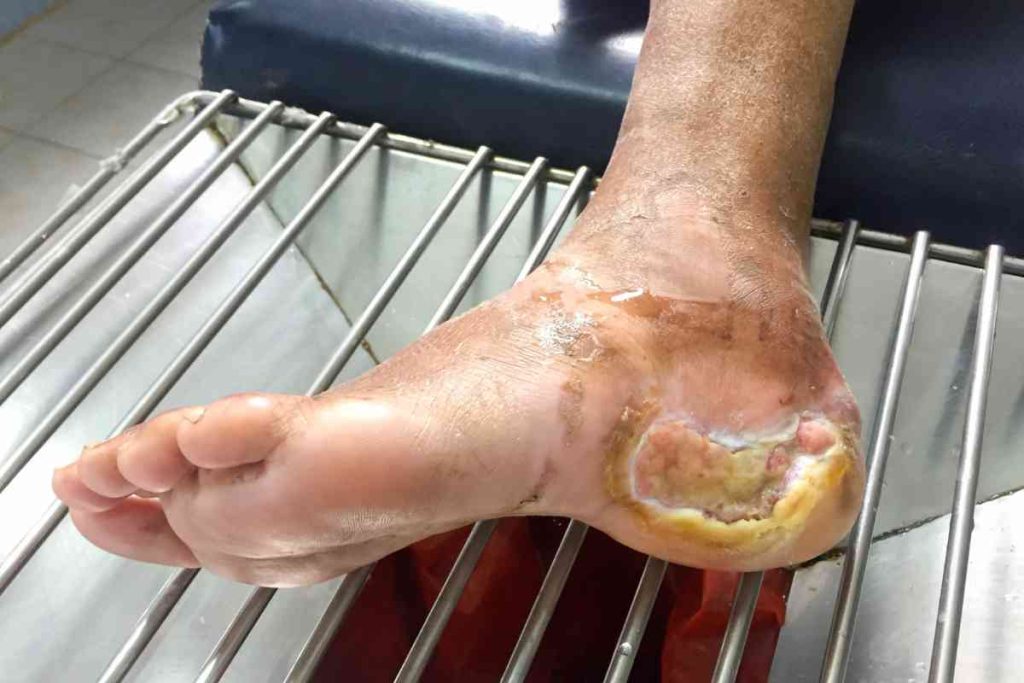
- Neuropathy: Effect of raised blood sugar on the small blood vessels that supply the nerves in the body, could lead to damage of those parts of the nerve, whose blood supply is disrupted. Clinical manifestation of the diabetic patients, whose nerves have been affected by poorly controlled diabetes depends on the part of body supplied by the nerve. When they set in, the effects frequently manifest on the distal parts of the body such as the fingers, feet, and penis; causing what is known as “Peripheral neuropathy”. This may present as numbness or tingling sensations on the feet and fingers. Loss of sensation on the distal parts of the limbs predisposes the diabetic patients to not being aware of some situations that inflict physical injuries on them. These injuries frequently develop into ulcers that are difficult to heal. If not properly treated, the diabetic ulcer could eventually lead to amputation of the affected limb. Other health situations that could arise from microvascular injury, resulting in nerve damage include; hearing loss, dental problems, and dementia. Neuropathy of the autonomic nervous system could lead to inability to achieve proper erection of the penis, diarrhea/constipation, and urinary incontinence/retention.
- Infections: Diabetic patients are more prone to infections than non-diabetics. Common infections found among people who have diabetes affect mainly the skin and urogenital system. These include; boils, candidiasis, abscesses, vulvitis and balanitis. Risk of surgical site infection is a lot higher among diabetic patients.
Macrovascular Diseases
Affect the large blood vessels of the body, commonly manifesting as cardiovascular diseases. It has been documented that diabetic adults have two to three times higher rate of cardiovascular diseases than those without diabetes. Uncontrolled diabetes enhances development of problems such as;
- Hypertension
- Stroke
- Coronary artery diseases
- Heart attack
- Angina pectoris
- Atherosclerosis
Myths and Misconceptions about Diabetes16,17
Some individuals hold onto erroneous information and beliefs that could expose them to developing diabetes, or having preventable complications of the disease. These myths and misconceptions include;
1. Diabetes does not run in my family, hence I can never be afflicted with the disease.
Family history is just one of the risk factors of diabetes. People who do not have positive family history of diabetes certainly can develop diabetes as a result of exposure to the other risk factors
2. I can no longer engage in strenuous exercises, since I am diabetic.
Exercising is a very key strategy in controlling diabetes. Many type 2 diabetics can be controlled on exercises and diet only, without using any medication. Diabetics can embark on any range of exercises, as longer as they keep an eye on their blood sugar level, ensuring that they do not slide into hypoglycaemia; especially if they are on antidiabetic medication.
3. Once I achieve normal blood sugar level while taking my diabetes treatment, then I am cured and can now discontinue the treatment permanently, and eat anything I like.
This is not true. The treatment goal in most diabetes cases is to achieve adequate control of the blood sugar, ensuring that complication do not result from poorly controlled sugar level. This enables the patient to continue enjoying good quality life. However, in secondary diabetes; effectively treating the primary cause of the disease, usually leads to permanent remission.
4. Diabetes is never curable
As already stated, secondary diabetes can be cured if the primary cause of the disease is cured. However, in the other types and classes of diabetes, the usual treatment goal is to achieve good blood sugar control. This usually requires proper lifestyle modification and correct use of drugs
5. The use of herbs given by traditional healers is more effective in treating diabetes than orthodox medicine.
This misconception has led to the death of many diabetic patients in low and middle income countries. It is possible that some leaves and herbs possess antidiabetic activities, but the doses and use are not standardized. Use of antidiabetic medication requires proper monitoring so that the treatment goal is achieved, and complications prevented.
6. Prayer houses, rather than health facilities are better places for the treatment of diabetes, since the disease is punishment from GOD for past sins, or projected through diabolical means.
Again, so many patients in low and middle income countries have died as a result of this misconception. In most cases, factors that lead to development of diabetes are known; and there are no bases to link them to punishment from GOD. Praying and being very close to GOD is very important for the spiritual development of man, but it is very important that patients keep to the advice and recommendations of their health care providers. This way, they prevent morbidity and mortality associated with their health condition.
7. Diabetes only affects old men and women.
Diabetes also affects children and adolescents. Type 1 diabetes rarely affects old men and women. Many children and adolescents are now becoming overweight and obese, thus increasing their chances of developing type 2 diabetes
8. Diabetes is contagious
Diabetes is completely non-communicable. It cannot be transmitted through contact with somebody who has the disease. Some even claim that it can be sexually transmitted. This is completely false
MESSAGE from Community Positive Health Attitude Initiative Team
Lifestyle modification is key to preventing, or properly managing diabetes. It is important that you watch what you eat, thus preventing overweight and obesity, which are very high-risk factors for diabetes.
It is also important that you embark on regular exercises, avoid cigarette smoking, and excessive alcohol consumption. Get screened for diabetes if you already have not done that.
The World Health Organization states in her key facts published on 16 September 2022, “Diabetes can be treated and its consequences avoided or delayed with diet, physical activity, medication and regular screening and treatment for complications”5.
We love you, and your family/friends love you too. You still have so much to contribute to the wellbeing of your loved ones and humanity generally.
Do not say “IT IS NOT MY PORTION”. It certainly can be anyone’s portion!
REFERENCES
- Obionu CN. Guide to Tropical Public Health and Community Medicine. First Edition, EZU BOOKS LTD, Enugu, Nigeria, 2018.
- World Health Organization. Global Report on Diabetes, 2016. World Health Organization, Geneva, Switzerland
- International Diabetic Federation. IDF Diabetes Atlas, 10th Edition. . https://diabetesatlas.org/ (Accessed 01/01/2023)
- World Health Organization. https://www.who.int/health-topics/diabetes#tab=tab (Accessed 01/01/2023)
- World Health Organization. https://www.who.int/news-room/fact-sheets/detail/diabetes (Accessed 01/01/2023)
- Falase AO, Akinkugbe OO. A Compendium of Clinical Medicine. New Edition, 2007. Spectrum Books Ltd, Ibadan, Nigeria.
- Cleveland Clinic. https://my.clevelandclinic.org/health/diseases/7104-diabetes-mellitus-an-overview (Accessed 01/01/2023)
- Brutsaert EF. DIABETES MELLITUS. MSD MANUAL. https://www.msdmanuals.com/professional/endocrine-and-metabolic-disorders/diabetes-mellitus-and-disorders-of-carbohydrate-metabolism/complications-of-diabetes-mellitus (Accessed 01/01/2023)
- Cleveland Clinic. https://my.clevelandclinic.org/health/diseases/7104-diabetes-mellitus-an-overview (Accessed 01/01/2023)
- Lucas AO, Gills HM. Short Textbook of Public Health Medicine For The Tropics. 4th Edition, 2003. ARNOLD Publishers, London, UK.
- World Health Organization. Global Action Plan for the Prevention and Control of Non-Communicable Diseases 2013 – 2020. WHO, 2013, Geneva, Switzerland
- Center for Disease Prevention and Control. https://www.cdc.gov/diabetes/managing/managing-blood-sugar/bloodglucosemonitoring.html (Accessed 01/01/2023)
- Weinstock RS. Patient education: Blood glucose monitoring in diabetes (Beyond the Basics). https://www.uptodate.com/contents/blood-glucose-monitoring-in-diabetes-beyond-the-basics (Accessed 01/01/2023)
- Bourne RR, Stevens GA, White RA, Smith JL, Flaxman SR, Price H, et al. Causes of vision loss worldwide,1990–2010: a systematic analysis. Lancet Global Health. 2013;1:(6)e339-e349.
- Emerging Risk Factors Collaboration. Sarwar N, Gao P, Seshasai SR, Gobin R, Kaptoge S, Di Angelantonio E. Diabetes mellitus, fasting blood glucose concentration, and risk of vascular disease: a collaborative meta-analysis of 102 prospective studies. Lancet. 2010 Jun 26;375(9733):2215–22.
- https://www.mountsinai.org/health-library/special-topic/diabetes-myths-and-facts (Accessed, 23/01/2023)
- Rai M, Kishore J. Myths about diabetes and its treatment in North Indian population. Int J Diabetes Dev Ctries. 2009; 29(3): 129–132


